Every digital twin proposal I’ve seen justified on capex forms starts with the technology and works backward to the use case. That’s the wrong direction, and it’s why so many plants end up with a beautifully rendered 3D model of a line that nobody has opened since commissioning. The question was never “how good can we make this twin.” It was always “what decision does this twin need to be good enough to support, and how often does that decision get made.”
Get that mapping wrong and you land in one of two failure modes, both expensive. You overbuild — commission a physics-accurate simulation to answer a question a spreadsheet could’ve answered — or you underbuild, feeding a predictive maintenance model with statistical correlations when the failure mode actually requires thermal or structural physics to catch early. Both mistakes get dressed up as “digital twin strategy.” Neither is one.
Fidelity is a cost you pay twice
The industry conversation about digital twins fixates on the upfront build: CAD import, sensor mapping, model calibration, the integration work to pipe OPC UA or MQTT Sparkplug B tag data into whatever engine is doing the computing. That’s real work and it’s rarely cheap. But the second cost — the one that kills most twins — is maintenance. A twin is a model of a physical system, and physical systems change: tooling wears, PLC logic gets patched, a robot gets re-taught, a supplier swaps a component with slightly different tolerances. Every one of those changes is model drift. If nobody owns updating the twin, it silently diverges from the real line until it’s producing confidently wrong answers, or until an operator notices it’s useless and stops trusting it entirely.
This is the “digital shelf-ware” trap, and it’s not a technology failure — it’s an ownership and cadence failure. High-fidelity twins built for one-time events (new line commissioning, a robot cell layout study) are often *supposed* to be retired or frozen after their job is done. The trap is when a twin built for a one-time decision gets sold internally as “our digital twin platform” and then quietly rots while everyone assumes it’s still authoritative.
Four tiers, mapped to decisions
Instead of asking “how much fidelity can we afford,” ask “what’s the cadence of the decision, and what does it cost us to get that decision wrong.” Those two variables — decision frequency and cost of error — do almost all the work in picking a tier.
Tier 1: Statistical / OEE-fed models
This is a data-driven model built on historical OEE, cycle time, and downtime data — no physics, no CAD, often just time-series analysis and control charts layered on top of your historian or MES data. It answers questions like “where’s our bottleneck this shift” or “is this line degrading versus baseline.” It’s cheap to build if your data infrastructure is already sound, and it’s the right tier for decisions made daily or weekly: shift-level line balancing, staffing allocation, short-interval control. The cost of being wrong is low and recoverable — you rebalance again tomorrow. Don’t build anything heavier than this for decisions your team already makes on a whiteboard every shift.
Tier 2: Discrete-event simulation
This is where most “line balancing” and “capacity planning” twins should actually live. Discrete-event simulation (tools like Siemens Plant Simulation, FlexSim, or Arena) models flow, queuing, and resource contention without needing to physically model forces, thermals, or kinematics. It’s the right tier when the decision cadence is monthly or quarterly — new product mix, buffer sizing, changeover strategy, headcount for a new shift pattern — and the cost of a wrong call is a quarter of lost throughput or an unnecessary capital request. It requires real modeling skill and calibration against actual line data, but it doesn’t require a physics engine, and it shouldn’t be procured as one.
Tier 3: Physics-based / high-fidelity twins
This is the tier vendors are most eager to sell you, and it’s genuinely necessary for a narrower set of decisions than the marketing suggests. Physics-based simulation — kinematic robot models, thermal and structural analysis, CFD for thermal processes — earns its cost when the decision involves something that will be expensive or dangerous to get wrong in the physical world: new-product introduction where tooling and fixture design have to be right before steel gets cut, predictive maintenance on assets where failure modes are genuinely physical (bearing fatigue, thermal creep, vibration-driven fracture) rather than just statistically correlated with runtime, or safety-critical robot cell layout. The decision cadence here is naturally low — this is a project twin, not a daily-operations twin — which is exactly why it needs a defined end state and an explicit owner, or it becomes the shelf-ware everyone points to as “our Industry 4.0 initiative” while it quietly goes stale.
Tier 4: Immersive / training twins
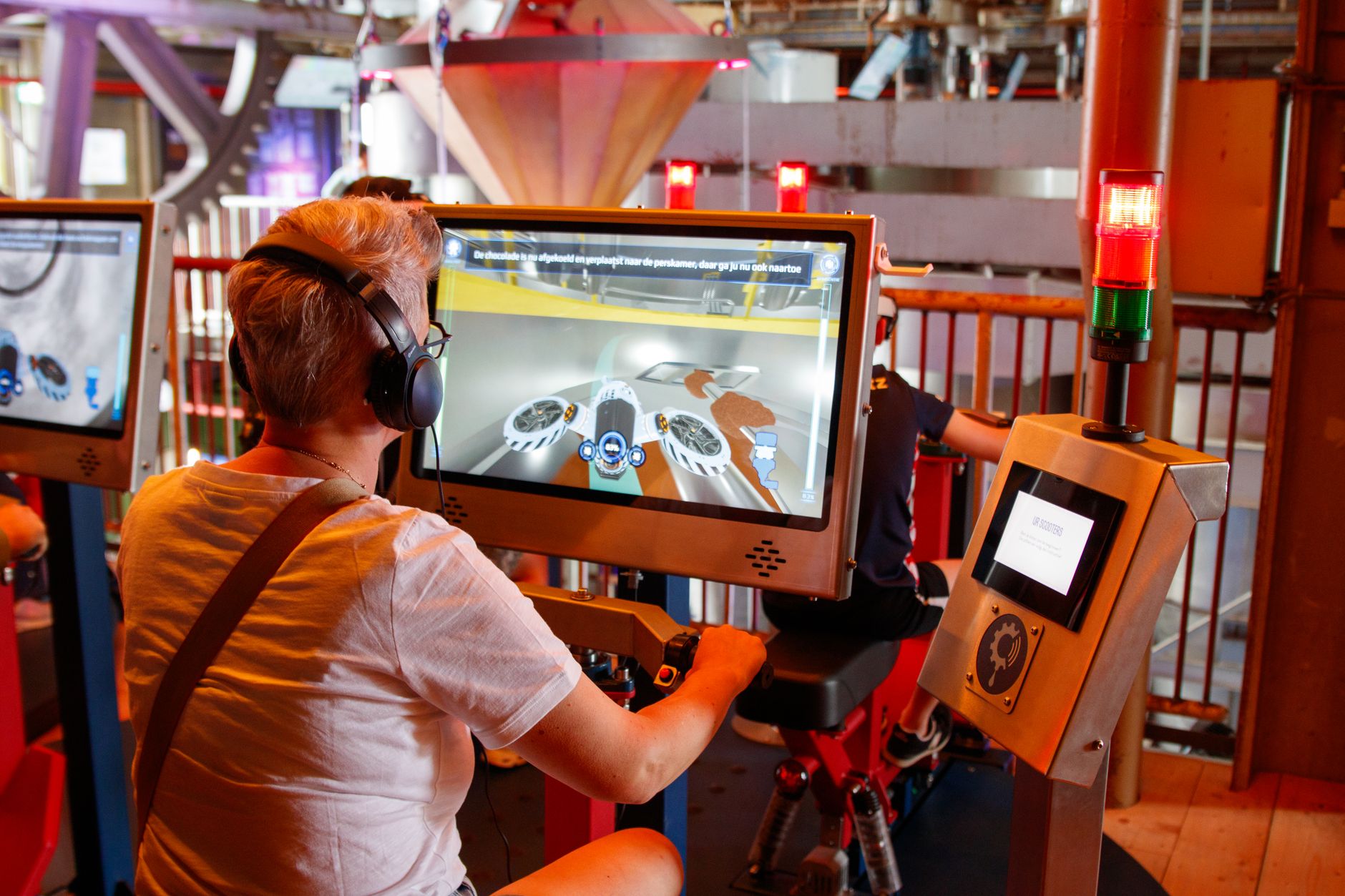
Operator training and onboarding twins, increasingly built on platforms like NVIDIA Omniverse or game-engine-based visualization, are a legitimately different category with a different fidelity requirement: visual and interaction fidelity matters more than sensor-accurate physics. A training twin needs to look and behave like the line enough that muscle memory transfers, but it doesn’t need to predict bearing wear. Don’t let this get bundled into a “unified digital twin platform” pitch as if it serves the same decision as predictive maintenance — the fidelity axis is completely different, and evaluating it against physics accuracy is the wrong test.
The question to ask before any twin RFP
Before you sign anything in this year’s capex cycle, force a one-page answer to three questions: What specific decision will this twin inform? How often is that decision made? What does it cost the plant when that decision is wrong? If you can’t answer all three, you’re not ready to pick a vendor — you’re ready to get sold a platform.
The vendors pushing bundled twin-and-MES renewals aren’t wrong that the technology works. Siemens Xcelerator, Rockwell and Emerson’s automation-plus-simulation offerings, and Omniverse-based partnerships are all credible platforms for the tier they’re built for. The mistake is treating “digital twin” as a single line item instead of four distinct tools with four distinct maintenance burdens. Buy the tier that matches your decision cadence, staff it with someone whose job includes keeping the model honest, and be explicit about which twins are permanent operational assets versus one-time project deliverables that should be archived, not evangelized, once the decision is made.
The plants getting real value out of this technology aren’t the ones with the most impressive-looking twin. They’re the ones who can tell you, in one sentence, what decision the twin changed last quarter.
This article was written with the assistance of artificial intelligence. While we aim for accuracy, the information may be incomplete, out of date, or incorrect, and should be independently verified before you rely on it for any decision. It is provided for general information only and does not constitute professional advice.