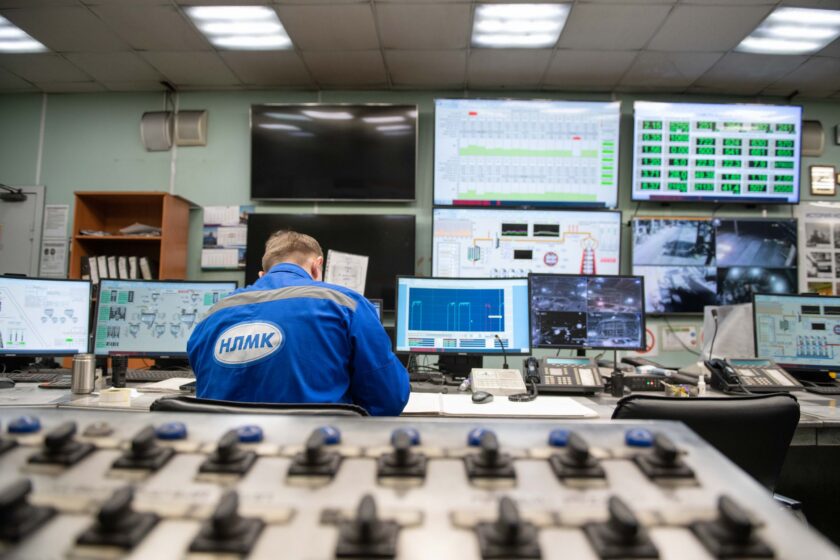

For twenty-odd years, the historian was the boring, reliable box in the corner. It scanned tags, compressed them, stored them, and let a controls engineer pull a trend when something broke. Nobody thought about it much, which is the highest compliment infrastructure can get. That’s changing. As MES platforms move toward cloud-connected, Unified Namespace-style architectures, the historian is no longer a passive archive sitting quietly behind SCADA — it’s expected to be a real-time data source feeding dashboards, MES contextualization layers, and cloud analytics simultaneously. A lot of plants are discovering, mid-renewal, that the historian they’ve trusted for a decade wasn’t built for that job.
This is a live decision for a lot of practitioners right now, not a theoretical one. Opcenter X, Plex’s Optix environment, and AVEVA CONNECT are all steering customers toward cloud-first or cloud-hybrid MES deployments. Every one of those architectures assumes a data layer underneath that can stream clean, contextualized time-series data outward without falling over or generating a surprise cloud bill. That assumption is where a lot of “modernization” projects actually start.
What’s actually different about the workload now
Classic historians — PI System, Canary Labs, Ignition’s built-in store, even a well-tuned InfluxDB instance — were designed and are still excellent for a specific pattern: high-frequency polling from a fixed, slowly growing tag list, queried mostly by engineers doing troubleshooting or process analysis, mostly on-prem. That pattern hasn’t gone away. But MES-driven analytics adds a second workload on top of it: continuous, concurrent queries from dashboards, OEE calculations, genealogy lookups, and cloud sync jobs, often against tag counts that are growing much faster than anyone budgeted for because every new sensor, PLC, and edge device now gets swept into the historian by default.
Four variables tend to expose the gap fastest:
- Write throughput. Historians built around scan-based polling architectures can choke when you add subscription-based OPC UA feeds pushing high-rate exception-based reporting from dozens of new edge sources at once.
- Tag count growth. Licensing models built around per-tag pricing from a slower era get expensive fast when tag counts triple because of added instrumentation, IIoT gateways, and MES-driven parameter tracking.
- Cloud egress cost. Streaming raw, uncontextualized tag data to a cloud MES layer is a different cost profile than sending pre-aggregated, contextualized batches — and this is where a lot of “we moved to the cloud” budgets get blown.
- Query latency for dashboards. A historian tuned for engineers pulling a trend over coffee behaves very differently under a UNS-style MES dashboard hitting it every few seconds for a live andon board.
The case for keeping what you have
In our assessment, plants with a stable tag count, a mature on-prem SCADA/historian pairing, and MES analytics needs that are mostly retrospective (shift reports, OEE rollups, quality trending) often don’t need to rip anything out. A well-administered PI System or Canary deployment, paired with a lightweight OPC UA gateway that exposes selected tags to the MES layer, can carry a lot of cloud-MES workload without a forklift replacement. The mistake here isn’t sticking with a classic historian — it’s assuming it will scale into a UNS-style publish/subscribe workload without any re-architecture at all. Adding a broker layer (MQTT Sparkplug B is the common pattern) between the historian and the MES/cloud tier, rather than pointing dashboards straight at the historian’s native query interface, is usually the difference between “it holds up” and “it falls over during a shift change.”
The case for layering an OPC UA-native store on top
This is the middle path, and it’s where a lot of practical decisions are landing in 2026. Rather than replacing the historian, plants add an OPC UA-native time-series store — purpose-built for high-cardinality, high-frequency ingestion with native contextual metadata — as a companion layer that feeds the MES/cloud side, while the classic historian keeps doing what it’s good at for engineering and compliance use cases. This suits shops with real tag-count growth pressure and multiple MES/analytics consumers, but where existing historian investment, validated processes (regulated industries in particular), or staff familiarity make a full replacement hard to justify. The tradeoff is real: you’re now running two data layers, which means two things to patch, back up, and reconcile when the numbers don’t match — and they occasionally won’t, because compression and interpolation logic differ between systems.
When full replacement actually pays for itself
Full replacement earns its cost when the classic historian is the constraint on the MES rollout itself — not just an inconvenience. That’s usually visible as: licensing costs scaling faster than tag growth justifies, write-side bottlenecks that no amount of gateway tuning fixes, an architecture that fundamentally can’t do OPC UA-native contextual metadata (so every MES integration needs custom mapping work), or a multi-site rollout where each plant historian behaves differently and central MES reporting becomes a reconciliation exercise. If your MES vendor’s cloud architecture (Opcenter X, Optix, CONNECT, or others) is the strategic direction for the next several years and your current historian is the thing consistently slowing that rollout down, replacement is usually a “when,” not an “if” — the only real question is timing it to a renewal cycle so you’re not eating both licensing costs at once.
A decision framework, not a verdict
Don’t start with the vendor pitch. Start with your own numbers: current and projected tag count, actual write throughput under peak conditions (not spec-sheet numbers), how many concurrent consumers (dashboards, MES, cloud sync) will query the data layer, and what a realistic cloud egress pattern looks like if you’re sending raw versus aggregated data. Map those against the three paths above. In our experience with how these projects tend to shake out, most plants land in the “layer” category by default, drift toward “keep” if they’re conservative on budget and risk, and only genuinely need “replace” when the historian is provably the bottleneck on a strategic MES initiative that’s already been funded. The worst outcome is deciding based on what the MES vendor’s reference architecture diagram shows, rather than what your actual tag growth and query patterns demand. Historians are boring infrastructure until they’re not — and the plants getting burned right now are the ones who never re-evaluated the fit once the workload changed underneath them.
This article was written with the assistance of artificial intelligence. While we aim for accuracy, the information may be incomplete, out of date, or incorrect, and should be independently verified before you rely on it for any decision. It is provided for general information only and does not constitute professional advice.