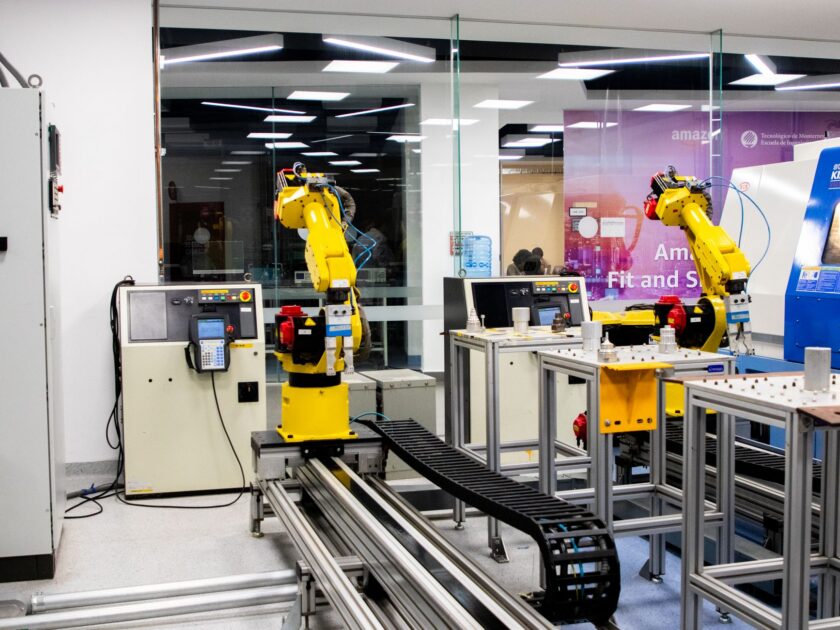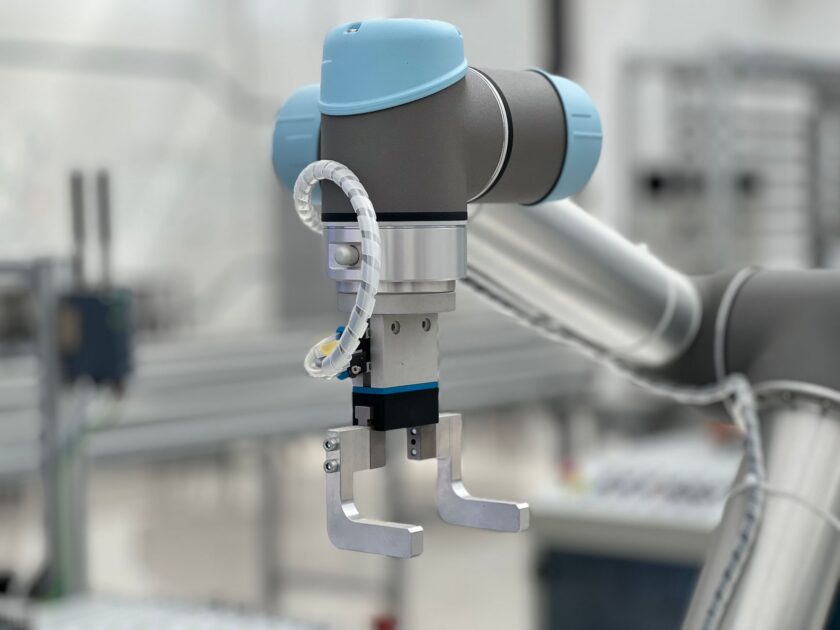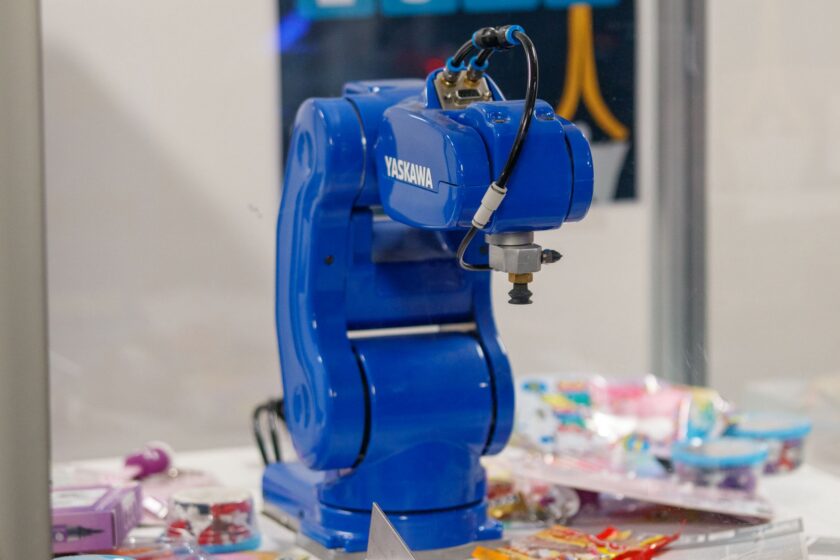
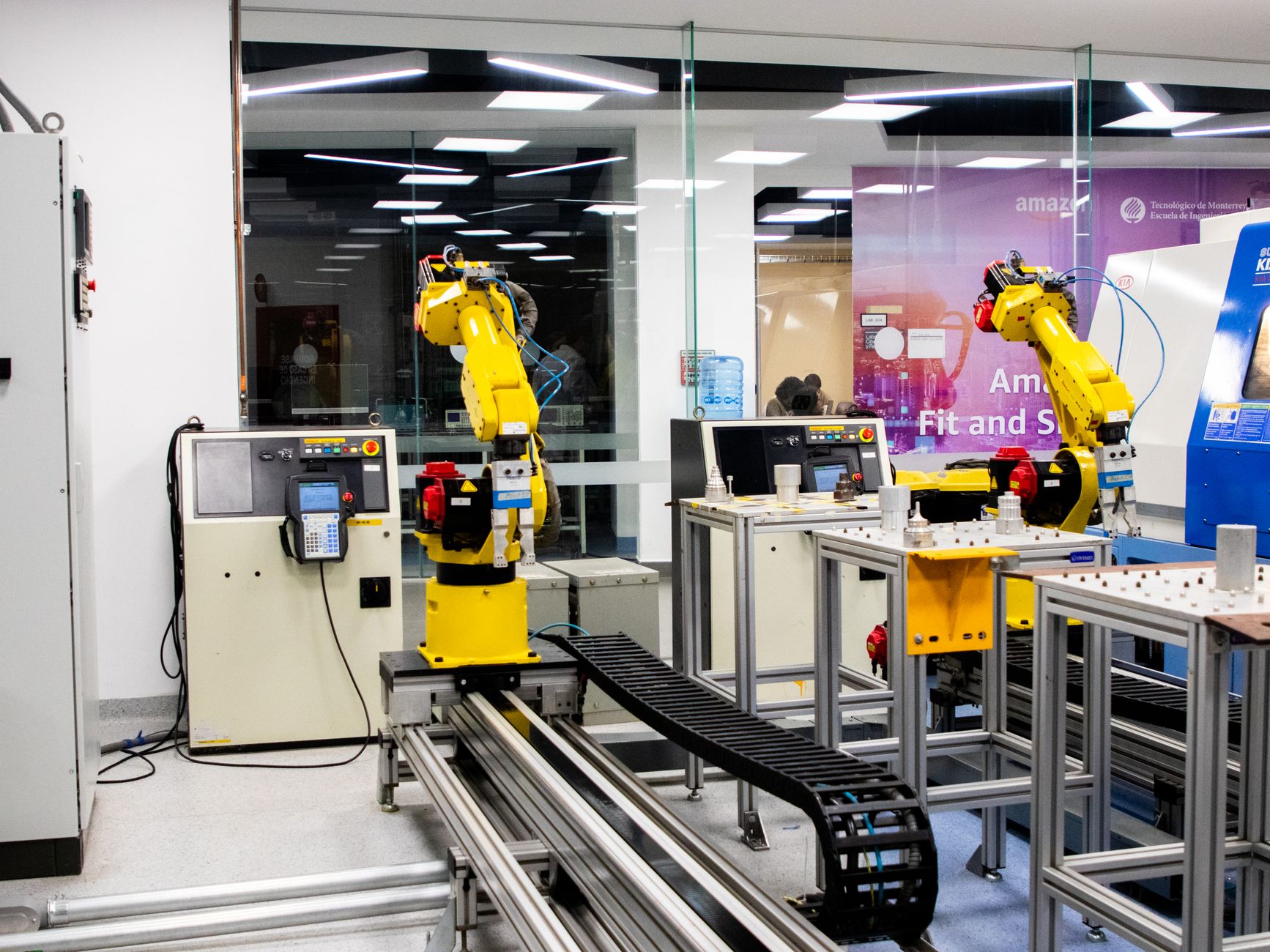
For about two decades, integrating a robot into a PLC-controlled cell has meant the same ritual: pull up the vendor’s fieldbus tag list, usually Ethernet/IP or PROFINET, cross-reference it against a PDF from the robot OEM, and hand-map bits into your ladder or structured text. Program number here. Fault code there. A handful of Booleans for “in position,” “at home,” “robot ready.” It works, but it’s brittle, vendor-specific, and every robot brand does it just differently enough that your integration standard is really just tribal knowledge sitting in an Excel tab.
The OPC UA Robotics Companion Specification, developed jointly by the OPC Foundation and VDMA, is the first serious attempt to replace that ritual with an actual information model — a standardized way to expose robot state, motion program selection, load data, and safety status as OPC UA nodes with defined semantics, rather than raw registers you have to decode by hand. What’s different about this year is that it’s no longer a spec sitting on a shelf. Major robot vendors now ship it in production firmware, and it’s landed inside the workflows engineers already use in TIA Portal and Studio 5000. That’s the thing that makes 2025-2026 the year this stops being a pilot-line curiosity and starts being a real commissioning decision.
What actually moves onto the common model
Be precise about scope, because the marketing around this tends to blur it. The companion spec standardizes the cell-level information exchange: robot operating mode, current program/job, execution state, axis-level status flags, safety-related I/O state, alarm and diagnostic data, and increasingly things like TCP position and payload identification. If you’ve spent hours reverse-engineering what bit 14 in a status word means on one robot brand versus another, this is exactly the pain it’s aimed at killing. An OPC UA client — your PLC, your SCADA, your MES — can browse the robot’s address space and get self-describing, typed data instead of an opaque register map.
What does not move: servo drive tuning, torque limits, current loop gains, jerk-limited motion profiles, anything that lives inside the robot controller’s real-time motion kernel. That boundary is intentional and it isn’t going away. OPC UA is a supervisory and diagnostic layer, not a real-time motion bus. The robot’s internal servo control still runs on whatever proprietary real-time backbone the vendor built — that’s where your actual motion tuning work happens, and it still requires the vendor’s native tools. Anyone expecting to eventually tune acceleration ramps through an OPC UA client is misreading what this standard is for.
Where this actually helps on the floor
The practical win is in commissioning time and long-term maintainability, not in some new capability the robot didn’t have before. A few concrete places it shows up:
- Program selection and state reporting becomes a standardized read/write against a defined node structure instead of a proprietary word you looked up in a manual. Your PLC logic for “tell the robot which recipe to run” gets simpler and more portable across robot brands.
- PackML alignment gets cleaner. The companion spec’s state model maps reasonably well onto the states manufacturers already use for ISA-88/PackML-style execution (idle, executing, held, suspended, aborted). That doesn’t mean you get PackML for free — you still have to build your state machine — but you’re no longer forcing a robot vendor’s bespoke status bits into a PackML shape by hand. The semantic gap between “what the robot is telling you” and “what your line state machine expects” narrows considerably.
- Safety I/O visibility improves for diagnostics and traceability, though don’t confuse this with safety-rated communication. The safety function itself still runs over a certified safety fieldbus or hardwired safety relay logic. What OPC UA gives you is standardized, non-safety-rated visibility into safety status for HMI, alarm management, and downtime analysis — genuinely useful, but not a replacement for your safety architecture.
- Multi-vendor cells stop being a integration tax. A cell with, say, one arm from one major vendor and another from a different one used to mean maintaining two completely separate tag-mapping schemes. A shared information model reduces that duplication, which matters more than it sounds like once you’re supporting the cell three years after commissioning and the integrator who built it is long gone.
The migration question: retrofit now, or wait for the next build
This is where I’d push back on the instinct to go rip out working fieldbus mappings on existing cells. If a cell is running, its tag maps are documented, and nobody’s actively fighting the integration, there’s no real case for a mid-life re-architecture just to get onto OPC UA. The risk-reward doesn’t favor it: you’re introducing new failure modes into a stable production system for a benefit that’s mostly about future maintainability, not present-day throughput or quality.
Where it’s worth doing now: new line builds, robot replacements or upgrades where you’re already touching the integration, and cells where the current mapping is genuinely a liability — poorly documented, built by a departed integrator, or fighting you every time you need to add a diagnostic point. If you’re already opening up the controller configuration for other reasons, layering in the companion spec’s OPC UA server support instead of extending the old fieldbus tag map is close to free, and it pays down technical debt you’d otherwise be carrying forward.
The other trigger worth watching is your MES or SCADA refresh cycle. If you’re re-platforming supervisory software anyway, that’s a natural point to standardize robot data acquisition on OPC UA rather than maintaining brand-specific drivers per cell. Doing it opportunistically, tied to work you’re already committed to, beats a standalone migration project every time.
What doesn’t change, and why that matters
Don’t let the excitement over a common information model convince you the underlying job is different. You still need to understand PLCopen motion function blocks, still need to know your robot vendor’s native programming environment for path planning and tool calibration, and still need the fieldbus or safety network for anything real-time or safety-rated. OPC UA Robotics is a better window into the robot’s state and a cleaner way to hand it program selections — it is not a unification of motion control architecture. Treat it as what it is: the supervisory layer finally catching up to the multi-vendor reality most plants have been living with for years, and a genuinely good reason to stop hand-decoding status words the next time you’re building a cell from scratch.
This article was written with the assistance of artificial intelligence. While we aim for accuracy, the information may be incomplete, out of date, or incorrect, and should be independently verified before you rely on it for any decision. It is provided for general information only and does not constitute professional advice.