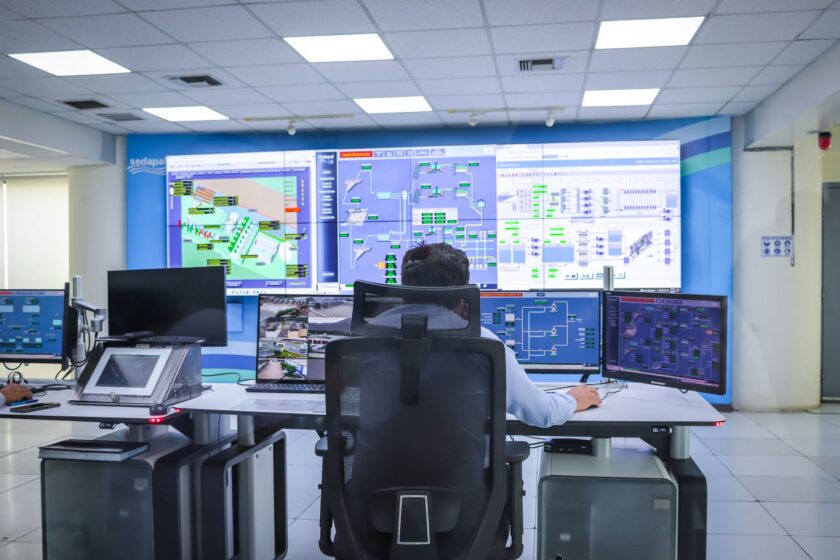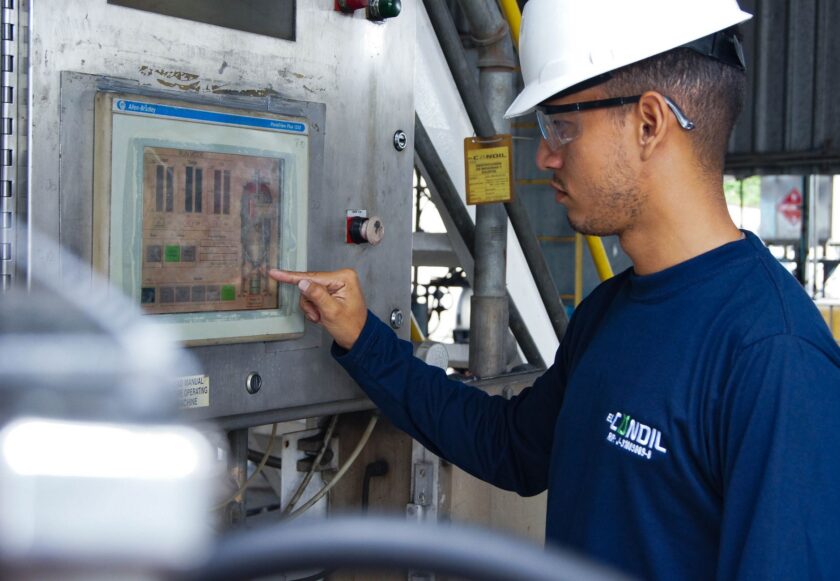
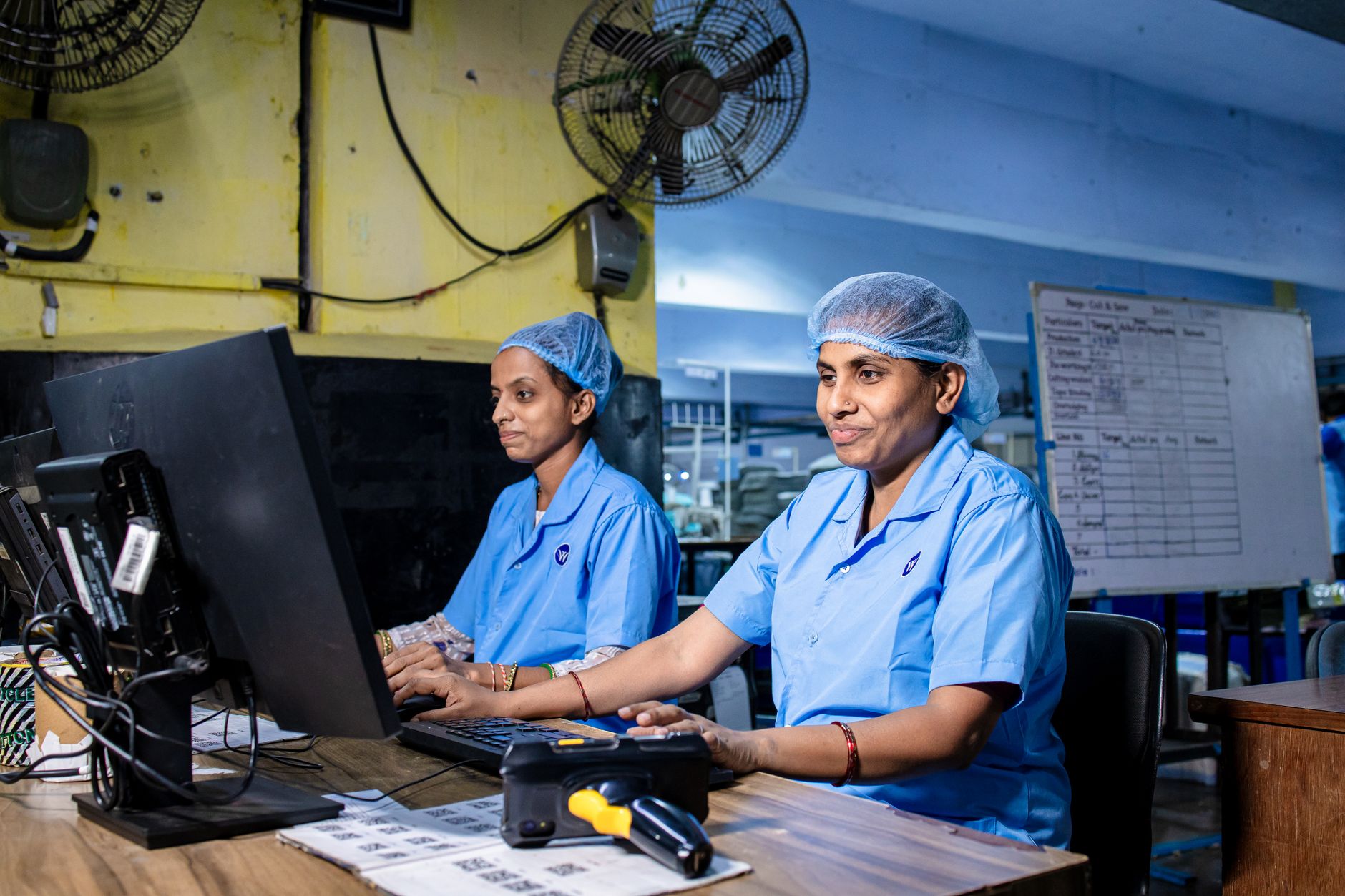
Every MES vendor’s sales deck now has an “edge” slide. That’s not an accident — edge compute SKUs have become the default entry point for new MES pilots, because they’re cheaper to provision, easier to get past IT security review, and let a plant manager say yes without a plantwide capital request. The problem is that “edge MES” doesn’t mean one thing. Some platforms run real transaction logic, OEE calculation, and andon workflows on a box sitting next to the line, fully capable of operating with the WAN down for hours. Others run a data historian and a protocol translator, ship the label “edge,” and quietly depend on a cloud or server connection for anything that resembles execution logic. Those are very different products to bet a pilot on.
What “edge-native” should actually mean
Before comparing platforms, it’s worth being precise about the bar. A genuine edge-native MES module should, at minimum:
- Execute core transactional logic locally — work order dispatch, genealogy capture, quality holds, and OEE/downtown reason capture — without a live link to a central server.
- Store and forward: buffer transactions during a network outage and reconcile them to the system of record without data loss or duplicate posting once connectivity returns.
- Run andon and alerting logic locally, since a line stoppage notification that depends on a WAN link defeats the point of andon.
- Support local HMI/visualization so operators aren’t staring at a spinner when the plant network hiccups.
Anything short of that is a smart gateway — useful, sometimes exactly what a shop needs, but not MES in the sense of managing execution. That distinction matters because vendors have real incentive to blur it.
Siemens Industrial Edge
Siemens has arguably invested the most in building an actual edge runtime rather than a marketing wrapper. Industrial Edge is a containerized app platform — you deploy discrete apps (data capture, OEE, protocol conversion, analytics) onto edge devices running Siemens’ management infrastructure, and several of those apps do real local computation, not just pass-through. The OEE and performance apps calculate on the device. Store-and-forward for historian data is mature, reflecting Siemens’ long history with SIMATIC and industrial networking. In our assessment, this is the platform most likely to satisfy a strict definition of edge-native execution today, particularly in shops already standardized on Siemens controls, where the integration story is naturally tighter.
Where it may not fit: the app-marketplace model means functionality breadth depends on what’s published for Industrial Edge specifically, and shops with heavily mixed-vendor PLC fleets may find the value proposition weaker than a Siemens-centric line.
Rockwell FactoryTalk Edge
Rockwell’s edge story has matured meaningfully with FactoryTalk Edge Gateway and related edge compute offerings, and its strength is deep, native handling of Allen-Bradley/ControlLogix data at the source. Local buffering and store-and-forward for tag data is solid. Where practitioners should look closely: how much of the actual production-tracking and downtime-reason-capture logic runs on the edge device itself versus being pushed up to FactoryTalk’s server tier for processing. Historically, Rockwell’s execution-layer products (like FactoryTalk ProductionCentre or Plant PAx-adjacent modules) have leaned on server infrastructure for the heavier MES logic, with edge acting more as high-fidelity connectivity and local resilience. That’s a legitimate architecture — it’s just not the same claim as “the MES runs at the edge.” Ask specifically what happens to a downtime-reason workflow when the plant WAN drops for an extended stretch, and get that answer in writing before you pilot.
AVEVA Edge
AVEVA Edge (the product line built on the former InduSoft and Wonderware InTouch Edge lineage) is genuinely strong as an edge HMI/SCADA runtime with local logic, scripting, and data buffering — it’s been doing disconnected/store-and-forward operation for a long time, well before “edge MES” was a category name. The nuance for MES buyers: AVEVA Edge itself is an HMI/edge runtime, and the MES-specific functionality (work orders, genealogy, quality management) generally lives in AVEVA’s broader MES/MOM suite, with the edge tier acting as the resilient front end and local execution/visualization layer that talks to that suite. It’s a coherent architecture, not a rebrand, but shops evaluating it should map exactly which MES functions have been pushed down to the edge tier versus which still require the full platform to be present and reachable.
Ignition Edge
Inductive Automation’s Ignition Edge is the interesting wildcard in this comparison, because it was architected edge-first from the start rather than retrofitted from a server product. Ignition Edge runs a genuinely local Ignition instance — tags, scripting, alarming, and store-and-forward to a central Ignition Gateway are core to the design, not bolted on. The catch, and it’s a real one: out of the box, Ignition Edge is a connectivity and lightweight execution layer, not a turnkey MES. The OEE, andon, and full production-tracking logic typically comes from third-party modules in the Ignition ecosystem or from system integrators building that logic on top. That’s a legitimate and increasingly popular path — the recent wave of Ignition Edge MES pilots is real — but it means the “how much runs locally” question depends heavily on which module vendor and integrator you’re working with, not just on Ignition itself.
Piloting one line before you commit: a practitioner checklist
Whichever platform you’re evaluating, don’t take the edge claim on faith. Pilot on one line, with these tests specifically:
- Pull the network cable. Literally disconnect the edge device from the plant WAN for a period long enough to matter — hours, not seconds — and confirm work orders, downtime capture, and andon alerts keep functioning locally.
- Check reconciliation on reconnect. When connectivity returns, verify buffered transactions post cleanly with no duplication and no silent drops. This is where a lot of “store-and-forward” claims quietly fail under load.
- Measure real latency, not spec-sheet latency. Time the interval from a PLC event to an operator-visible andon signal and to a historian-visible OEE update, under normal and degraded network conditions.
- Map what’s genuinely local versus server-dependent. Get a written architecture diagram from the vendor or integrator showing exactly which functions execute on the edge device and which require the central server or cloud tier to be reachable.
- Model the 3-year TCO honestly. Edge licensing tiers are usually priced to look attractive against a full server-based MES rollout, but factor in per-device licensing as you scale beyond one line, integrator time to build out logic that isn’t native to the platform, and the eventual cost of consolidating multiple edge deployments into a plant-wide system of record. A single-line pilot’s economics rarely extrapolate linearly to a multi-line or multi-plant footprint.
Bottom line
Edge-native MES is a real and increasingly sound way to start — lower upfront commitment, faster time to a working pilot, and genuine resilience benefits if the platform actually executes locally. Siemens Industrial Edge and Ignition Edge, in our assessment, come closest to the strict definition of local execution, though for very different reasons: Siemens through a mature containerized runtime, Ignition through an architecture that was edge-first from day one but leans on its ecosystem for MES-specific logic. Rockwell and AVEVA both offer credible, resilient edge tiers, but buyers should be precise about which MES functions actually run on the device versus which still lean on a server or platform tier being reachable. None of that makes those approaches wrong — a hybrid edge/server architecture is a legitimate design choice. It just means “edge MES” isn’t a single checkbox. Ask each vendor the same blunt question — what still works when the network is down for half a shift — and make them answer it in an architecture diagram, not a slide.
This article was written with the assistance of artificial intelligence. While we aim for accuracy, the information may be incomplete, out of date, or incorrect, and should be independently verified before you rely on it for any decision. It is provided for general information only and does not constitute professional advice.