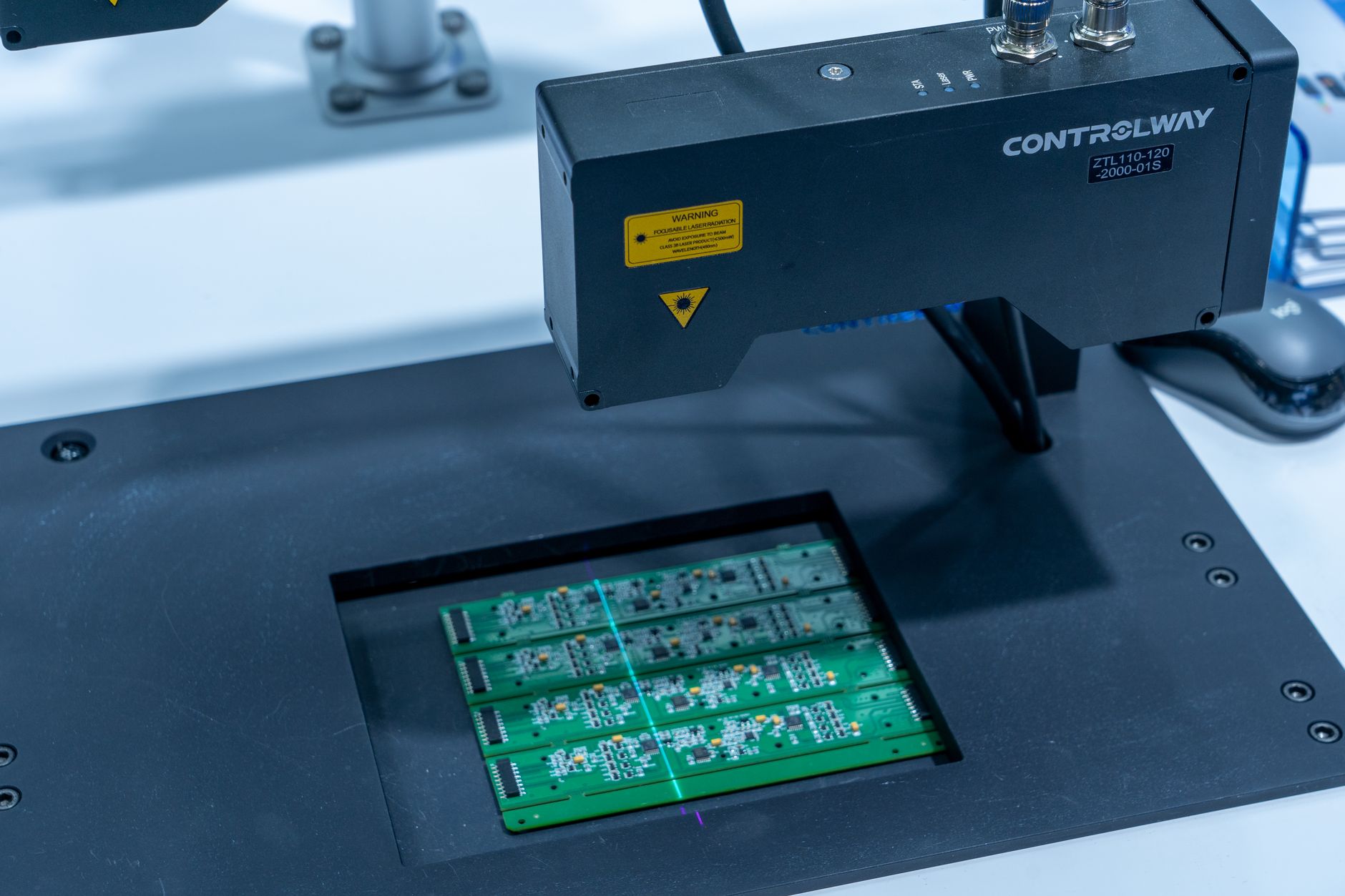
For about two decades, the machine vision playbook on most lines was settled. You picked a part feature, wrote a blob tool or an edge-finding algorithm, tuned thresholds against a sample set, and moved on. Cognex VisionPro, Keyence’s CV-X and XG series, and similar toolchains made that workflow fast and, more importantly, predictable. You could explain exactly why a part failed inspection, because the failure was a number crossing a threshold you set yourself.
That predictability is exactly what classical vision starts to lose when the defect isn’t a clean geometric deviation — when it’s a scuff, a texture inconsistency, a solder joint that’s “off” in a way no caliper measurement captures cleanly. Deep learning models are good at exactly that kind of fuzzy, high-variance pattern. The problem is they’ve historically needed a GPU workstation and a vision engineer who also moonlights as a data scientist to deploy. The 2026 wave of edge AI vision controllers — Cognex’s In-Sight AI-enabled line, Siemens SIMATIC vision boxes with embedded neural inference, and Rockwell/FactoryTalk’s vision expansions — changes the economics and the deployment path enough that plant engineers are now making this call on real retrofit jobs, not pilot cells tucked in a corner of the lab.
So the question isn’t “is deep learning vision mature yet.” It clearly is. The question is: for this specific inspection station, is it the right tool, and what are you signing up for operationally if you say yes?
The decision isn’t classical vs. deep learning — it’s defect type vs. defect type
Start with what the defect actually looks like, not with what hardware you want to buy.
Classical tools remain the better choice when the feature you’re checking is geometric, high-contrast, and dimensionally definable — presence/absence of a component, edge position, hole count, label placement, barcode grade. These are cases where a blob area or an edge-to-edge distance is a faithful proxy for pass/fail, and a threshold genuinely means something. Classical tools are deterministic, fast to validate, and cheap to maintain. If your current pattern-matching tool is failing on this kind of defect, the fix is usually better lighting or fixturing, not a neural network.
Deep learning earns its keep when the defect is defined by texture, surface variation, cosmetic irregularity, or a combination of features that no single measurement captures — things like weld splatter, injection-molded surface flow lines, fabric or leather grain defects, or subtle assembly anomalies where the “correct” appearance has natural variation baked in. If your engineers have spent months tuning thresholds and pattern-match scores and still can’t hold false-reject rates down without also missing real defects, that’s the tell. You’re fighting natural variance with a tool built for fixed geometry.
A rule of thumb worth applying literally
If you can describe the pass/fail rule in one sentence using a measurement — “reject if hole diameter is outside spec” — stay classical. If the best your quality team can do is “reject if it looks wrong,” you’re in deep learning territory. That sentence test filters out a lot of unnecessary AI projects.
The part nobody puts in the pilot demo: labeling burden
Every vendor demo runs on a pre-trained or pre-labeled dataset. Your line doesn’t have one. Getting a supervised model to production accuracy means collecting images across your actual defect population — not just the dramatic failures, but the borderline cases that will actually drive your false-accept and false-reject rates in production. For low-defect-rate processes, that means deliberately sourcing rejects from history, running known-bad samples back through the station, or working with quality to build a defect library over weeks or months, not days.
Budget for this as an ongoing role, not a one-time setup task. Someone — a quality engineer, a controls engineer, sometimes a rotating shift lead — needs to own image labeling and dataset curation on a continuing basis, because new defect modes will show up after launch that weren’t in your original set. Plants that treat labeling as a project milestone rather than a standing responsibility are the ones that watch model accuracy quietly decay six months in.
Retraining triggers: decide them before you need them
Set explicit, monitored triggers for when a model needs retraining, rather than waiting for the line to notice a quality escape. Reasonable triggers include a sustained rise in reject rate beyond your baseline variance, a new part revision or supplier change that alters surface appearance, a camera or lighting hardware swap, or a drift in the model’s own confidence score distribution — most edge AI inference tools expose a confidence or anomaly score per inference, and a slow downward creep in average confidence is often the earliest warning you’ll get, well before the reject rate itself moves.
Write these triggers into your control plan the same way you’d document a gauge calibration interval. “Retrain when we feel like it’s getting worse” is not a maintenance strategy.
Explainability: your quality auditor doesn’t care about your F1 score
This is where a lot of otherwise-solid AI vision deployments run into trouble with quality and regulatory audits, particularly in automotive, medical device, and aerospace supply chains. A classical vision tool can produce a report that says exactly which measurement failed and by how much. A deep learning classifier, left alone, produces a probability and not much else.
Close that gap deliberately. Most current edge AI vision platforms support some form of visual explainability — heat maps or activation overlays showing which region of the image drove the classification. Capture and archive those overlays alongside the pass/fail decision for every reject, not just the ones someone happens to review. When an auditor asks why a part was rejected, “the model was fairly confident” is not an answer; a saved heat map showing the flagged region, tied to a part serial number and timestamp, is. Build that logging into the deployment from day one — retrofitting an audit trail after a customer complaint is a miserable exercise.
Keep the ladder-logic fallback — always
Here’s the part of the framework that’s non-negotiable: never deploy a deep learning inspection station without a deterministic fallback path in the PLC. Model drift, camera fouling, lighting degradation, and network hiccups between the vision controller and the PLC are all real and all eventually happen. When the vision controller’s confidence score drops below a set floor, or the vision-to-PLC handshake times out, ladder logic should default to a hard reject — not a pass, and not a system fault that halts the line waiting for someone to notice.
That fail-safe reject path is simple, boring, and exactly why it belongs in ladder logic rather than in the model. It’s the same design principle as a normally-closed safety relay: when something in the smart layer fails, the dumb layer takes over and defaults to the safe state. A model that’s drifted and quietly passing bad parts is a far worse failure mode than a station that reject-defaults into a manual inspection bin for a shift while someone retrains.
Where this actually nets out
The honest read on 2026’s edge AI hardware wave is that it removes a real technical barrier — you no longer need a GPU server rack and a custom integration layer to get deep learning inference running fast enough for line rate. What it doesn’t remove is the operational discipline: someone has to own the dataset, own the retraining cadence, and own the audit trail. Plants that treat the new vision controller as a drop-in replacement for a Cognex or Keyence classical tool, without building those three ownership roles into the project plan, are the ones who’ll be back to blob detection within a year, muttering about how the AI camera “didn’t work.” Plants that build the framework first and pick the hardware second are the ones who’ll actually keep it running.
This article was written with the assistance of artificial intelligence. While we aim for accuracy, the information may be incomplete, out of date, or incorrect, and should be independently verified before you rely on it for any decision. It is provided for general information only and does not constitute professional advice.