If you sat through a vendor pitch in the last year that used the phrase “physical AI,” you already know the tone: a little breathless, a lot of NVIDIA Cosmos and Isaac Sim slides, and a promise that your digital twin is about to get a brain. Strip away the keynote polish and there’s a real technical shift underneath — foundation models trained to predict how the physical world behaves, not just render it. That’s genuinely different from what most plants have running today. But “different” doesn’t mean “ready for your line,” and the gap between the two is exactly where a lot of budget is about to get spent poorly.
This is worth sorting out now because the pitch has changed. Through 2025 and 2026, “physical AI” stopped being a research term and became a packaged offering — world-foundation-model tooling for sim-to-real robot training, synthetic video generation for defect detection, robot foundation models that claim to generalize across tasks with less task-specific programming. Vendors are pitching these as the natural next step for plants that already built a unified namespace and a Tier 1 or Tier 2 digital twin. For a lot of plant engineers, that’s exactly where you are: UNS is live, MQTT Sparkplug B is moving tag data around, you’ve got a twin that visualizes or maybe simulates line behavior. The question on the table is whether the next layer is worth building on top of that, and what it actually costs you in data work before it does anything useful.
What a world model actually is, versus a digital twin
Your existing digital twin, if it’s like most, is a physics-based or geometry-based simulation: CAD models, kinematics, maybe a discrete-event simulation of line throughput built in a tool like Siemens Plant Simulation or a Tecnomatix environment. It’s deterministic. You built the rules — conveyor speeds, cycle times, robot reach envelopes — and the twin plays them out. It’s excellent at “what happens if we change this parameter” and useless at “what does a bearing that’s about to fail actually look and sound like.”
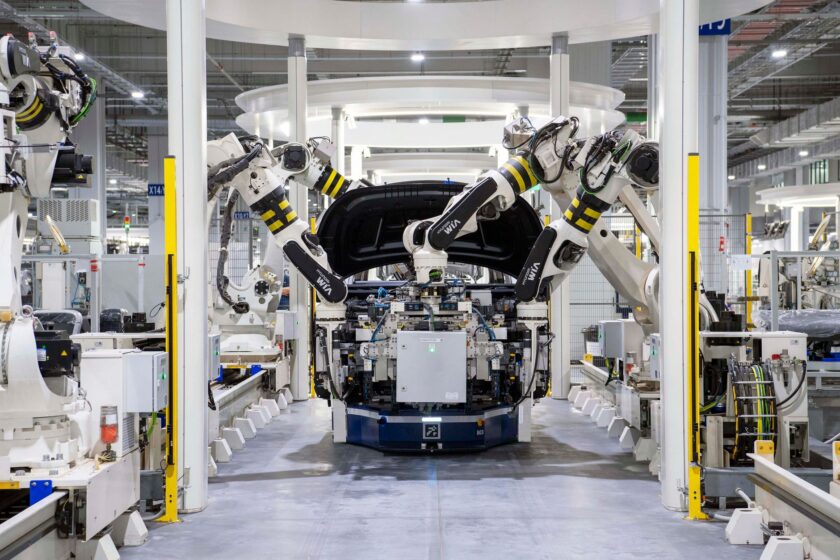
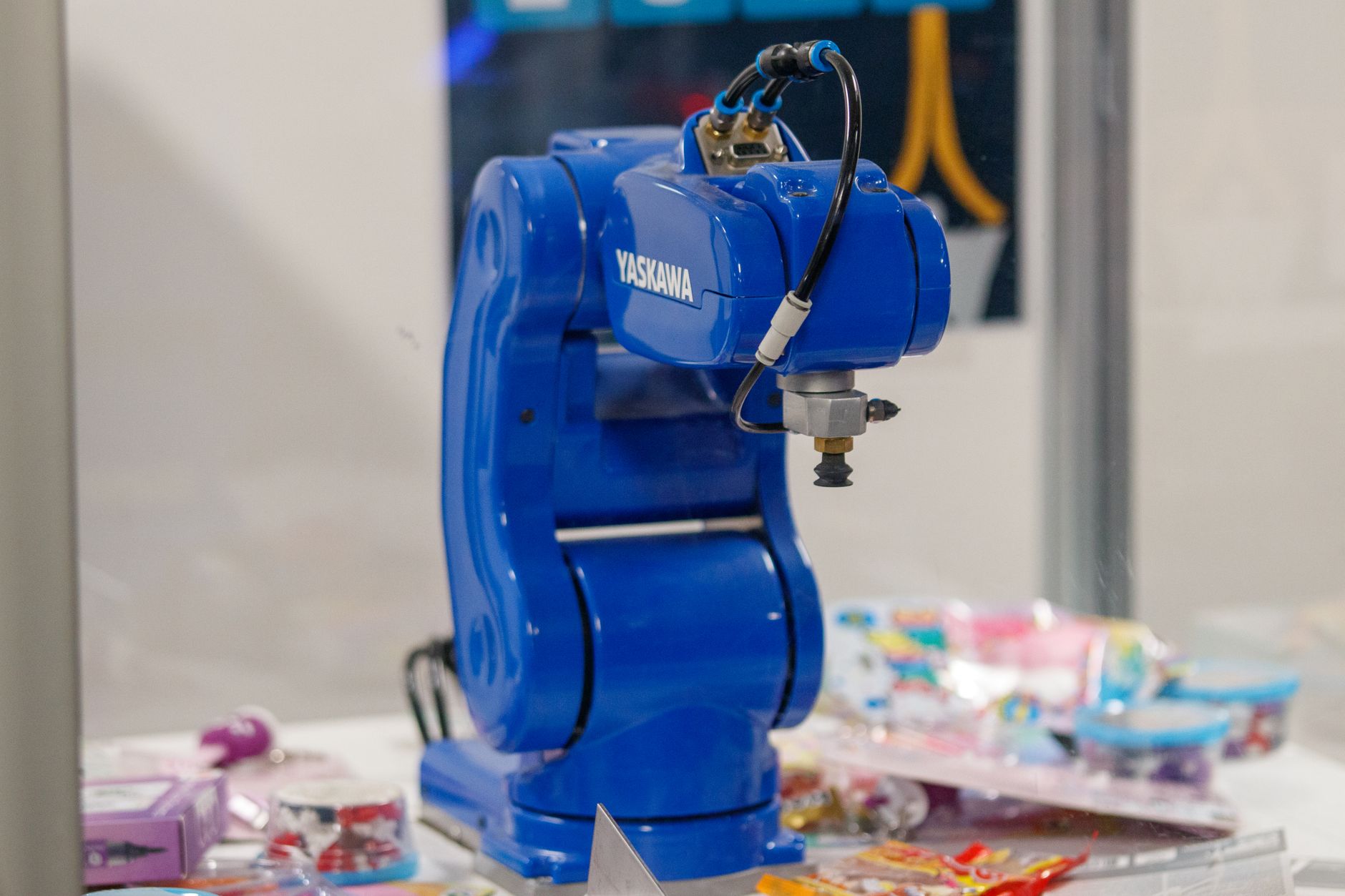
A world model is trained, not authored. It’s a foundation model — architecturally related to the video- and multimodal-generation models you’ve seen in consumer AI — that learns the statistical structure of how physical scenes evolve from watching enormous volumes of video and sensor data. NVIDIA’s Cosmos platform is the most visible industrial framing of this: models trained to predict plausible future frames of a physical process, generate synthetic variations of a scene, or serve as a simulation backbone for training robot policies before they ever touch real hardware. Robot foundation models are the sibling technology — models trained across many robots and tasks that are meant to transfer motor skill and manipulation competence with less per-task engineering than classical robot programming required.
The practical distinction: your digital twin encodes what you already know about the process. A world model is supposed to learn things you didn’t explicitly encode — subtle visual signatures of an emerging defect, the way a gripper’s grasp behaves across slightly different part geometries, failure modes that show up in vibration-and-thermal signatures together in ways nobody wrote a rule for. That’s the appeal. It’s also exactly why the data requirements are so much steeper.
The unglamorous prerequisite: your data pipeline
This is where most plants find out their UNS was built for the wrong job. A unified namespace built around OPC UA and MQTT typically carries structured tag data — temperatures, pressures, cycle states, counts — organized in an ISA-95-style hierarchy. That’s the right foundation for MES functions and for classical digital twins. It is not, by itself, what a world model needs.
Physical AI pilots require, at minimum:
- Synchronized multimodal streams. Video (often multiple camera angles) time-aligned with sensor tags at a resolution tight enough that a frame corresponds to a known machine state. Most plants have cameras for quality inspection and a historian for tags, running on entirely separate clocks with no shared correlation ID.
- Labeled or at least weakly-labeled data. Even self-supervised world models need some ground truth to fine-tune against for a specific defect class or failure mode — someone has to have tagged “this sequence is a good part,” “this sequence is a scratch defect,” “this sequence precedes a jam.” Building that label set is manual, slow, and usually the actual bottleneck, not the model.
- Enough volume and variety. Foundation models are data-hungry, and industrial failure events are rare by definition — that’s the whole point of predictive quality. Getting sufficient examples of the failure modes you care about, across the range of real variation (lighting, material lot, tooling wear), is a multi-month data collection exercise before any model training starts.
- A sim environment that matches your real cell geometry. Sim-to-real robot training needs an Isaac Sim or equivalent digital replica accurate enough in physics and appearance that a policy trained in simulation transfers to the physical robot without a large “reality gap.” That’s a serious simulation engineering effort, not a checkbox.
None of this is what your existing UNS or Tier 1/2 twin was built to produce. Most plants have zero synchronized video-plus-tag capture running today. That’s not a criticism of the original architecture — it was built for MES integration and OEE, not model training — it’s just a fact about scope.
What’s real right now, and what to actually do
Sim-to-real for robot manipulation is the most mature piece — it’s been used in logistics and discrete manufacturing robotics for a while, and the newer foundation-model layer mainly improves generalization and reduces the amount of task-specific tuning. Synthetic video generation for augmenting rare-defect training sets is real and useful today, provided you can supply a seed set of authentic examples; it’s not a replacement for having some genuine labeled data. General-purpose “watch the line and tell us what’s wrong” world models with no domain-specific fine-tuning are still closer to demo than deployment for most quality applications — treat vendor claims here with real skepticism.
The honest move for a plant that already has UNS and a working twin is not to buy the foundation-model layer this year. It’s to spend the next cycle building the multimodal data capture: synchronized video-and-tag logging on your highest-value line, a labeling process (even a lightweight one) for the failure modes that actually cost you money, and an accurate sim replica of one cell if robotics is your use case. That data infrastructure is valuable on its own — it improves your existing quality and maintenance analytics regardless of whether you ever adopt a world-model product. When a physical AI pilot does make sense, you’ll be the plant that can actually feed it, instead of the one discovering mid-pilot that six months of “AI-ready” video was neither synchronized nor labeled.
This article was written with the assistance of artificial intelligence. While we aim for accuracy, the information may be incomplete, out of date, or incorrect, and should be independently verified before you rely on it for any decision. It is provided for general information only and does not constitute professional advice.