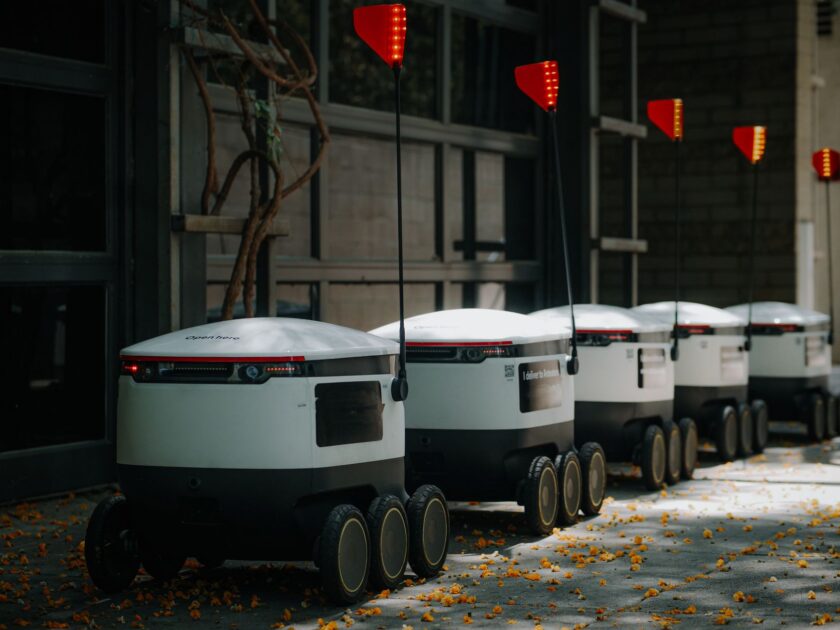
You’ve spent the last couple of years getting AMR fleets to behave. VDA 5050 gave you a common language for fleet dispatch, and most plants have made peace with the fact that a mobile robot’s path is probabilistic rather than a fixed rail on the floor. Now the same conversation is happening one level up, at the arm. Vendors across the robotics and chip supply chain are pushing vision-language-action models — foundation models trained on large, diverse manipulation datasets — into pilots for pick, place, kitting, and light assembly. The pitch is familiar: point a general-purpose policy at a new part, show it a few examples or give it a natural-language instruction, and skip the weeks of teach-pendant work a changeover used to require.
Some of that pitch is real. Some of it is the same “no-code robotics” promise the industry has been making, in one form or another, for over a decade. The job of a plant engineer right now is to figure out which parts of your cell actually benefit from a probabilistic policy and which parts should stay exactly what they are today: deterministic, auditable, PLC-coded motion.
What’s actually different about a foundation-model arm
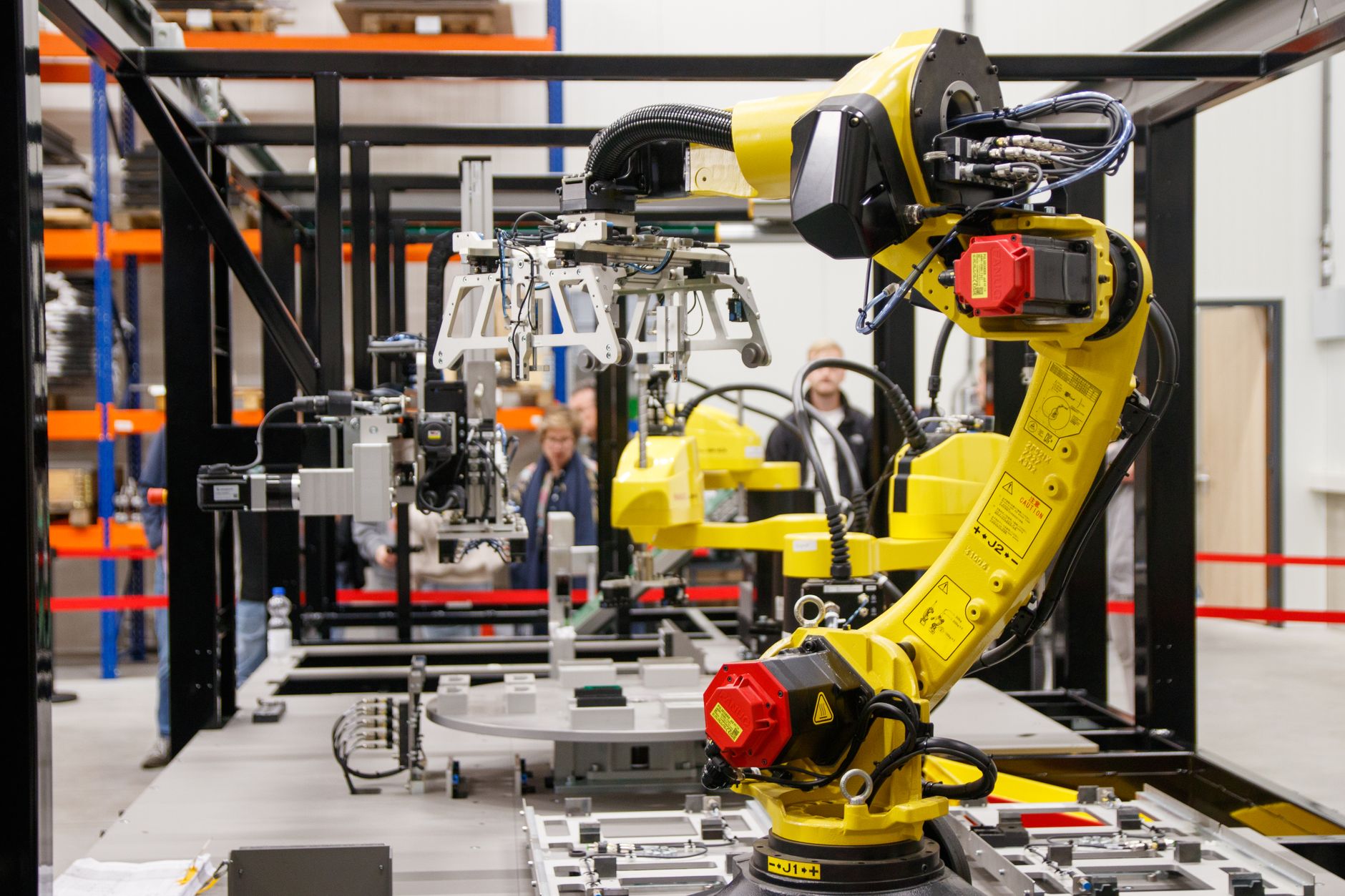
A traditional robot program is a fixed sequence: taught points, defined paths, discrete I/O triggers, motion blended by known velocity and acceleration profiles. It’s brittle to part variation but completely predictable — the same input state produces the same output motion, every time, and you can prove that to an auditor.
A vision-language-action policy works differently. It takes in a camera feed (and sometimes force/torque or language input) and outputs a continuous action, re-inferred at a high rate, based on weights learned from a training corpus that may include data from robots and tasks that have nothing to do with your part. The upside is generalization: the same policy can often handle a part that’s rotated, slightly deformed, or in a bin with other parts, without a re-teach. The downside is that you no longer have a discrete “program” in the traditional sense — you have a model checkpoint, a confidence distribution over actions, and a behavior that can drift as lighting, fixturing, or part supplier changes.
That’s the crux of the evaluation problem. You’re not comparing two ways to write the same program. You’re comparing a deterministic control system to a statistical one, and they fail differently.
Where general-purpose policies genuinely help right now
The clearest wins are in tasks that are high-mix, low-volume, and currently bottlenecked on programming time rather than cycle time — random bin picking of varied SKUs, kitting where part orientation and mix change frequently, or first-pass assembly cells for new product introduction where you’d otherwise burn a controls engineer’s time re-teaching points every time a variant changes. If your current pain is “we spend more time reprogramming the cell than running it,” a policy-driven arm that can be shown a new part and adapt without a full re-teach is solving a real problem, not a hypothetical one.
Vision-guided pick from unstructured or semi-structured presentation is the other honest use case. Deterministic robots have always struggled with parts that arrive in unpredictable poses unless you invest heavily in fixturing or structured lighting. A learned policy with strong visual generalization can reduce that fixturing burden — which is a real capital and engineering cost, not just an SEO talking point.
Where PLC-coded determinism is still the safer bet
For anything safety-rated, anything requiring guaranteed force or torque limits near a person, and anything where a single missed cycle creates a scrap or safety event you can’t tolerate, stick with deterministic motion. High-volume, low-mix lines — the classic automotive-style fixed cell doing the same weld or fastening operation tens of thousands of times a shift — don’t need generalization. They need repeatability, and a taught path executed by a motion controller is still the most auditable, most repeatable way to get that. Foundation-model policies are, as of now, not where you want your torque-critical fastening or your pressure-sensitive insertion running unsupervised.
There’s also a maturity gap worth naming plainly: these models are earlier in their industrial deployment curve than AMR fleet software was when VDA 5050 standardized around it. Expect real pilots, expect real vendor claims about generalization, and also expect that qualifying a policy for a regulated or safety-critical application will take longer and require more validation rigor than swapping in a new robot program ever did.
The traceability problem nobody’s MES handles today
Here’s the part that should worry plant IT and quality more than the robotics itself. Your MES genealogy model almost certainly assumes that “the program that ran on this unit” is a discrete, versioned artifact — a program number, a recipe ID, a PLC firmware revision. That model breaks, quietly, the moment the thing executing motion is a neural network with continuous inference.
If a policy-driven arm assembled or placed a part, and a quality issue shows up downstream, “which program ran” isn’t a sufficient answer anymore. You need to know which model checkpoint or policy version was loaded, what confidence score the policy reported at each decision point (or at minimum for the operations that touched that specific unit), and — critically — whether the cell fell back to human teleoperation at any point during that unit’s cycle. A teleoperation fallback event is functionally a process deviation, and if your MES doesn’t capture it with the same rigor as a manual override on a PLC-driven line, you have a genealogy gap that will surface exactly when you can least afford it: during a recall investigation or a customer PPAP audit.
Practically, this means extending your MES data model in a few concrete ways: log policy version alongside recipe/program ID at the unit-serial level; capture a confidence or uncertainty metric per operation, not just pass/fail; timestamp and flag any teleoperation or human-assist intervention as a distinct event type in genealogy, not buried in a general alarm log; and treat model updates the way you already (should) treat PLC firmware changes — with change control, a validation record, and a rollback path. None of this requires exotic tooling. It requires deciding, before the pilot cell goes live, that “probabilistic program” is a first-class concept in your traceability schema instead of an afterthought bolted on when someone asks a hard question in an audit.
What to actually do about it this year
Pilot foundation-model manipulation where changeover programming time is your real bottleneck, not because a vendor demo looked impressive on a controlled bin of parts. Keep deterministic PLC motion on anything safety-rated or high-volume-fixed until the industrial validation story for these models matures further. And before you sign off on any pilot cell, get quality, MES, and controls engineering in the same room to define what “genealogy” means when the program is a checkpoint file instead of a ladder routine. The AMR fleet integration taught the industry that standardizing the interface — VDA 5050, in that case — mattered more than any single vendor’s fleet manager. The manipulation arm generation is going to need its own version of that discipline, and right now nobody’s written it down yet. Don’t wait for a standards body to do it for you; write your own internal spec for what a policy-driven cell has to log before it touches a serialized unit.
This article was written with the assistance of artificial intelligence. While we aim for accuracy, the information may be incomplete, out of date, or incorrect, and should be independently verified before you rely on it for any decision. It is provided for general information only and does not constitute professional advice.