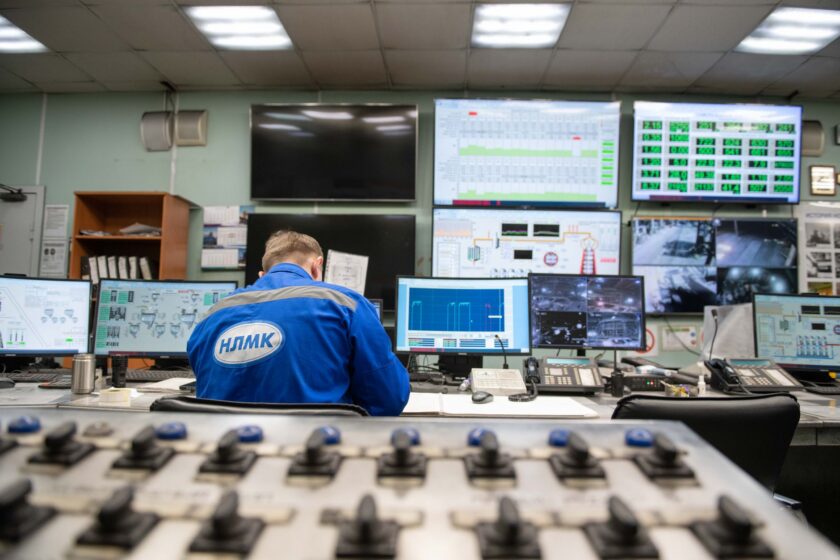
Every historian renewal conversation now includes the word “consumption.” Vendors that used to sell you a perpetual license and a server have moved, or are actively moving, toward tiered and usage-based cloud pricing tied to tag count, data volume, or retention window. At the same time, the edge compute hardware that’s been quietly running your local historian instance for the better part of a decade is hitting end-of-life. Those two clocks are running out at the same time for a lot of plants this year, and it’s forcing a question that used to be mostly academic: where should your time-series data actually live?
The honest answer is that it lives in more than one place. The interesting engineering work is deciding the boundary — what stays on an edge appliance at the line, what gets forwarded to a cloud historian tier, and at what resolution. Get that boundary wrong and you either pay for cloud ingestion you don’t need or you lose the millisecond-resolution data you actually needed the one time a batch went bad.
What “edge historian appliance” actually means here
This category covers purpose-built or purpose-configured edge compute running local time-series collection and short-to-medium-term storage close to the machine. Think CODESYS-based and PLCnext-class edge controllers, Siemens Industrial Edge running historian or data-capture apps on Industrial Edge Management, and Rockwell’s FactoryTalk Edge Gateway pattern for buffering and forwarding OT data. These devices sit between the control layer and the enterprise network. They’re built to keep running when the plant’s WAN connection isn’t — a design assumption that turns out to matter more than most people expect until the day the ISP link drops during a shift change.
Cloud-first historian subscriptions — the tiered offerings from the major historian vendors, plus various cloud-native time-series platforms — invert that assumption. Data collection still happens at or near the edge, but the historian’s storage, querying, analytics, and retention live in the vendor’s cloud, and you pay based on tag count, ingestion rate, or stored volume rather than a one-time server license.
The three variables that actually drive the decision
Skip the philosophy debate about edge versus cloud as an abstract architecture question. In practice, three concrete variables decide the split for any given line or asset.
Network reliability at that specific location
Cloud historians assume a reasonably continuous, reasonably low-latency path to the internet. If your plant network is solid — fiber backbone, redundant WAN, a mature OT/IT segmentation with reliable routing through the DMZ — that assumption holds. If you’re dealing with a remote facility, a mobile or skid-mounted asset, a plant on cellular backhaul, or a network that OT trusts about as far as it can throw it, you need local buffering regardless of where the historian ultimately lives. Edge appliances with store-and-forward buffering are the practical answer to unreliable links; the data collects locally and reconciles to the cloud tier when connectivity returns. This isn’t an argument against cloud historians — it’s an argument that the edge layer doesn’t disappear just because you adopt one.
Tag-count economics
Consumption-based pricing changes the math on what’s worth sending upstream. A press line with a few hundred tags polled once a second is a rounding error on most tiered plans. A high-speed packaging line or a continuous process with thousands of tags sampled at sub-second intervals is a different animal entirely — the ingestion volume adds up fast, and a lot of those tags are diagnostic or interlock-status points nobody queries after the shift ends. The practical move is tag triage: classify tags by whether anyone actually needs them beyond the local line for trending, quality investigations, or enterprise KPI rollups. Route only that subset to the cloud tier at native resolution. Everything else stays local, where storage is comparatively cheap and already paid for in the hardware.
How long you genuinely need full resolution
This is the variable teams underestimate. Most process and discrete data doesn’t need to stay at full resolution forever — it needs to stay at full resolution long enough to support the investigation window that actually happens in practice: a quality hold, a changeover troubleshoot, a warranty claim, a short-term SPC study. After that window closes, aggregation (minute or hour averages, min/max/count) captures what long-term trending and enterprise reporting actually use. The edge appliance is the right place to hold short-window, high-resolution data cheaply. The cloud tier is the right place for long-horizon, aggregated data that needs to be queryable across sites, joined with ERP or quality data, or fed into a broader analytics stack. Pushing raw high-resolution data to a cloud tier and paying to retain it indefinitely is, in our assessment, one of the more common ways plants overspend on these subscriptions without gaining anything a well-designed aggregation policy wouldn’t have given them for less.
Where each approach genuinely fits
Edge appliances earn their keep on lines where network reliability is a real question, where tag volume is high relative to what the enterprise actually needs to see, or where the plant’s engineering team wants direct, low-latency access to raw data for local HMI trending and troubleshooting without a round trip to the cloud. They also fit shops that have already invested in the automation vendor’s ecosystem — Siemens Industrial Edge makes obvious sense next to a fleet of Siemens controllers, and the same logic applies to Rockwell’s edge gateway pattern in a Rockwell-heavy plant, since the integration and lifecycle management tooling is already there.
Cloud-tiered historian subscriptions fit multi-site operations that need centralized visibility, corporate teams doing cross-plant benchmarking, and situations where the value is in scale — machine learning workflows, enterprise dashboards, or long-term retention that would be painful to manage on distributed local hardware. They also reduce the local IT burden of patching, backing up, and hardware-refreshing a fleet of on-prem historian servers, which is a genuine advantage for lean plant IT teams.
Neither approach suits a shop that tries to do all of it in one tier. All-edge leaves corporate blind to cross-site trends and multiplies hardware lifecycle work. All-cloud, adopted uncritically at renewal because it’s the path of least resistance, tends to produce a subscription bill that scales with tag count regardless of whether that data resolution was ever needed past the first week.
The renewal-season decision framework
- Audit tag count and sample rate per line before you touch the pricing sheet. You cannot negotiate a consumption-based contract intelligently without knowing your actual ingestion footprint.
- Map network reliability by location, not by corporate assumption. The headquarters network being solid tells you nothing about the remote line running on a cellular modem.
- Set a retention and aggregation policy before you set an architecture. Decide how long full resolution actually needs to live before you decide where it lives.
- Treat the edge appliance and the cloud tier as a pipeline, not a choice. Local buffering and triage feeding a cloud tier at the right resolution is usually the answer, not “either/or.”
The vendors pushing consumption pricing aren’t wrong that cloud-tiered historians solve real problems — multi-site visibility chief among them. But the renewal conversation is the wrong place to let the pricing model dictate the architecture. Do the tag audit first, then decide what actually needs to leave the plant floor.
This article was written with the assistance of artificial intelligence. While we aim for accuracy, the information may be incomplete, out of date, or incorrect, and should be independently verified before you rely on it for any decision. It is provided for general information only and does not constitute professional advice.