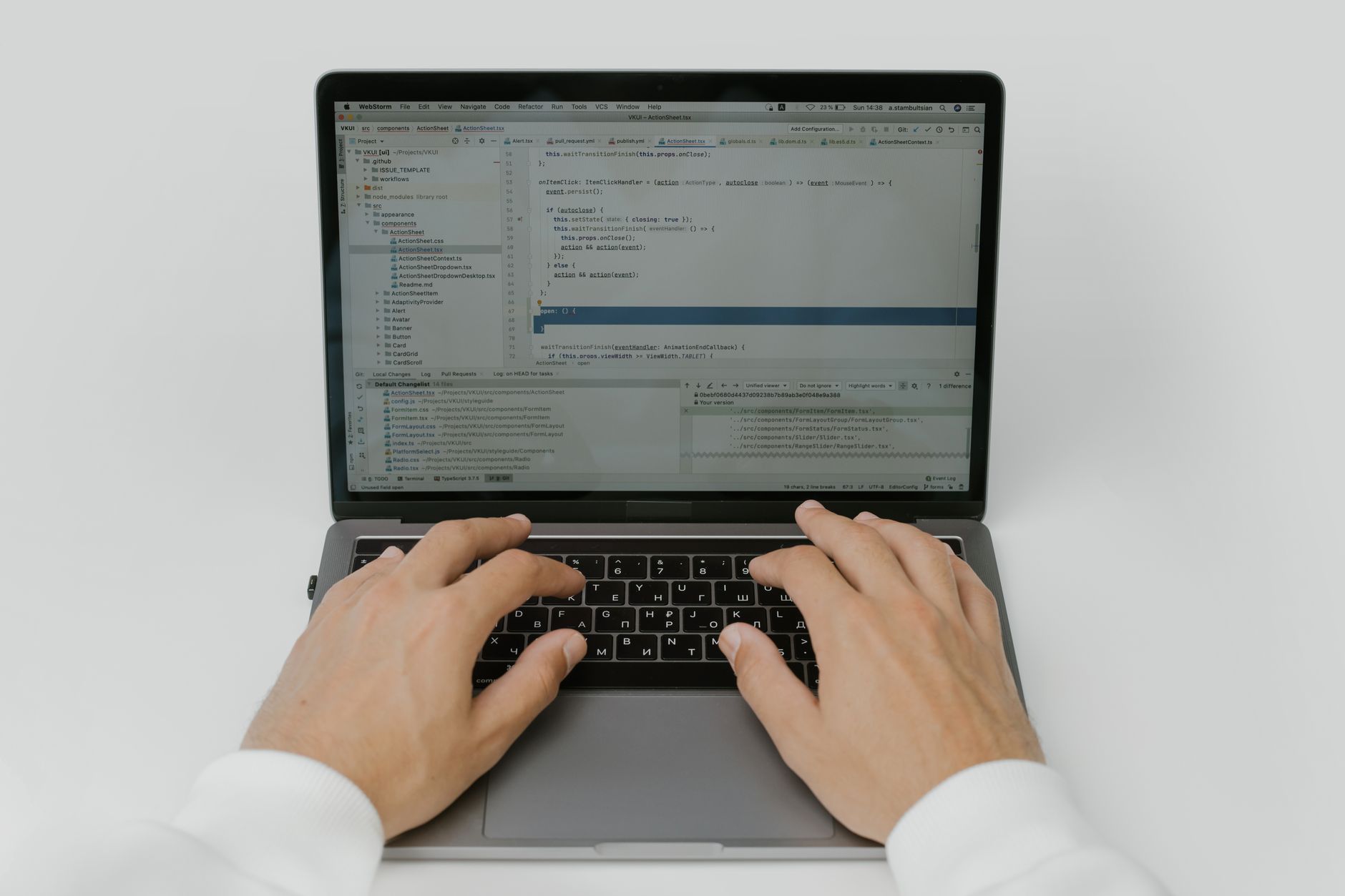
For about two decades, TIA Portal’s value proposition was consistency: install the engineering framework once, and every hardware family, network config, and programming language lived inside one project tree, on one desktop machine, tied to one licensed seat. That model is now being pulled apart. TIA Portal X, Siemens’ next-generation engineering environment, moves core functions into a browser, connects the toolchain to cloud services, and — most consequentially for programmers — starts generating ladder logic and SCL from natural-language prompts through Copilot-style integrations. This is not a skin change on the same application. It’s a shift in where engineering compute happens, how licensing works, and who — or what — writes the first draft of your control logic.
If you run a plant floor, the interesting question isn’t whether this is impressive technology. It obviously is. The interesting question is what breaks in your validation and change-control process if you adopt it without adjusting your practices to match.
This Is an Architecture Shift, Not a Feature Update
Three things are changing at once, and they compound each other. First, engineering is moving from a locally installed, offline-capable desktop app toward a browser-based front end with cloud-connected services behind it — think project data, libraries, and AI inference living somewhere other than your engineering laptop’s hard drive. Second, licensing is shifting toward subscription models rather than perpetual per-seat licenses, which changes budgeting and also changes what happens to your tooling if a subscription lapses or a network connection drops. Third, AI code generation enters the loop as a genuine authoring tool, not a code-completion convenience — you can describe a sequencing interlock in plain language and get back a block of SCL or a rung of ladder that’s syntactically valid and plausible-looking.
Each of these is manageable on its own. Together, they mean the artifact that ends up running your PLC may have been drafted somewhere other than your control room, by something other than a controls engineer, using a toolchain that assumes connectivity you may not always have on the plant floor. That’s the part worth being deliberate about.
A Decision Framework for AI-Generated Logic
Treat AI-generated ladder or SCL the way a good quality system treats any code from an unqualified source: useful as a draft, not admissible as a deliverable until it clears the same gates everything else does. In practice that means:
- Trace it to a spec, not a prompt. If the logic can’t be mapped back to a documented functional requirement — interlock condition, sequence step, alarm setpoint — the prompt that generated it isn’t documentation. Write the requirement first, generate second, and keep both.
- Simulate before you touch hardware. TIA Portal’s simulation environment (PLCSIM/PLCSIM Advanced) isn’t optional for AI-authored logic — it’s the minimum bar. Run the full range of inputs you’d expect in production, including the edge cases and fault conditions a generative model has no real incentive to consider unless you asked for them explicitly.
- Check for plausible-but-wrong logic, specifically. Language models are fluent, and fluency is exactly the failure mode that hurts you here — code that compiles, scans clean, and does something subtly different from what you meant. Watch for off-by-one timer logic, inverted interlock conditions, missing edge-detection on latching bits, and safety-adjacent logic that looks structurally right but omits a fail-safe path. These are the same bugs junior programmers write; the difference is a junior programmer usually knows they’re unsure.
- Never let AI touch safety logic unsupervised. Anything feeding a safety PLC or SIL-rated function should be written and reviewed by a qualified engineer against IEC 61508/61511 practice, full stop. Use AI to draft comments or explain existing safety logic if you like — not to originate it.
- Run it through the same peer review as human-written code. If your shop does code review for hand-written blocks, AI-generated blocks get the same review, by someone who reads SCL fluently, not a rubber stamp because “the tool already checked it.”
The Comment Problem
One underrated risk: AI-generated logic tends to arrive under-documented or over-documented with generic, unhelpful comments. Either way, you lose the tribal knowledge that usually rides along with hand-written blocks — the comment that says why a delay is 3.2 seconds and not 3, because that’s what the mechanical guys found by trial and error. Make documenting the “why,” not just the “what,” a mandatory step before any AI-assisted block gets committed.
Version Control Gets More Important, Not Less
Browser-based engineering and cloud project storage tempt teams into treating the cloud copy as the source of truth and skipping local versioning discipline. Resist that. If anything, a cloud-connected toolchain with AI-generated content needs tighter version control than the old desktop-only model, for a simple reason: you now need to know not just what changed, but whether a human or a model wrote it, and against what prompt or requirement.
- Keep exporting to a real version control system (Git, or Siemens’ own versioning tooling) rather than relying on cloud project history alone. Cloud history tracks state; it doesn’t reliably tell you intent.
- Tag or annotate AI-assisted commits distinctly from hand-written ones, at least until your team has enough track record to trust the pattern of errors it produces.
- Maintain a known-good, exportable offline copy of every production project. If your engineering workflow depends on connectivity to draft or compile logic, you need a fallback that doesn’t.
Where the Classic Desktop Toolchain Still Wins
Air-gapped and highly regulated lines — pharma, defense, anything under strict change-control regimes with validated system requirements — aren’t good candidates for cloud-connected engineering regardless of how good the AI assistance gets. If your process validation depends on demonstrating a closed, controlled engineering environment, a browser-based tool with cloud inference introduces exactly the kind of external dependency your auditors will ask about. For those lines, the traditional installed TIA Portal desktop application, offline libraries, and manual change control remain the right call, and Siemens has so far kept that path available rather than forcing migration.
The practical split for most plants will be pragmatic rather than ideological: use browser-based, AI-assisted engineering for non-safety logic on networked lines where iteration speed matters, and keep the classic desktop toolchain for safety systems, air-gapped cells, and anything under formal validation. That’s not a compromise — it’s just matching the tool to the risk.
What to Actually Do This Year
Don’t wait for a mandate to migrate. Start now by writing down what your current change-control process assumes — connectivity, seat licensing, human authorship — and flag which assumptions AI-assisted, browser-based engineering breaks. Pilot AI code generation on a sandboxed, non-production project first, and measure how often the generated logic needs correction before you trust it on anything connected to real I/O. And update your review checklist explicitly to call out AI-authored blocks as a category needing scrutiny, rather than assuming your existing “review new code” habit will catch what’s different about it. The tool is genuinely useful. The discipline around it is what keeps it from becoming the next incident report.
This article was written with the assistance of artificial intelligence. While we aim for accuracy, the information may be incomplete, out of date, or incorrect, and should be independently verified before you rely on it for any decision. It is provided for general information only and does not constitute professional advice.