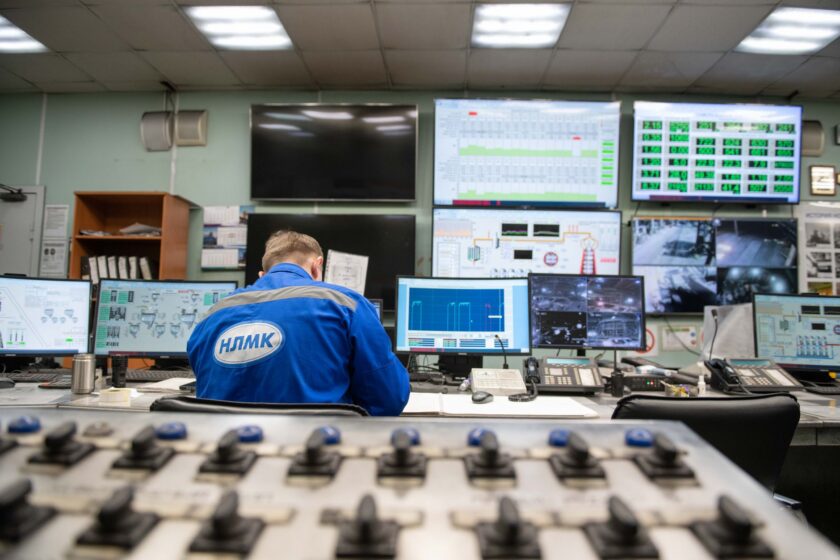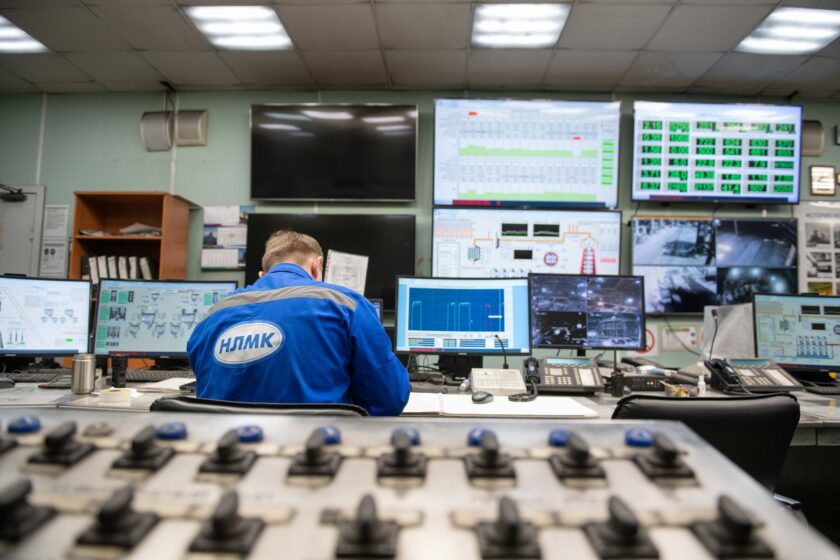

For most of the last decade, “edge historian” meant one ruggedized box bolted to a rack somewhere near the line, feeding a single on-prem SQL historian that IT tolerated and controls engineers quietly resented. The economics have changed. Edge compute — a fanless industrial PC, a gateway appliance, sometimes just a container running on hardware that was already there for something else — now costs little enough that plants are deploying it per line, per cell, or even per machine, rather than one node covering an entire building.
That shift sounds like a hardware story. It isn’t. The real problem it creates is operational: once you have thirty or eighty edge nodes instead of three, “edge vs. cloud” stops being the interesting question. The interesting question is how you version, patch, license, and structure tags across a fleet of devices without your historian architecture turning into thirty slightly different snowflakes that nobody can fully explain a year later.
What’s actually on the shelf
The category isn’t one thing. It’s useful to separate the players by what problem they were originally built to solve, because that lineage still shows in how they behave at scale.
Ignition Edge, from Inductive Automation, is a stripped-down version of the full Ignition platform meant to run at the device or line level and forward data upstream to a full Ignition Gateway. Its strength is architectural consistency — the tag structure, scripting model, and licensing philosophy are the same whether you’re running one Edge instance or two hundred, which matters enormously once you’re managing a fleet.
AVEVA Edge (the product formerly known as InduSoft/Movicon-lineage HMI/SCADA) leans on AVEVA’s broader Connect and historian ecosystem, making it a natural fit for plants already standardized on AVEVA System Platform or PI. Its appeal is less about being edge-native from a clean-sheet design and more about extending an existing enterprise investment down to the line level.
Litmus (Litmus Automation) positions itself squarely as an edge data infrastructure and app orchestration layer — closer to an industrial IoT gateway with containerized app support than a traditional historian. It’s built for teams that want to run analytics, protocol conversion, and MES connectors as separate deployable modules rather than one monolithic package.
HiveMQ Edge is different again: it’s fundamentally an MQTT broker with edge protocol translation (OPC UA, Modbus) baked in, aimed at getting data into a Sparkplug B-compliant pipeline rather than functioning as a historian itself. It’s infrastructure you’d pair with something else for storage and visualization, not a drop-in historian replacement.
Traditional on-prem historians — think classic PI, Wonderware Historian, Ignition’s own full Gateway historian — remain the baseline everyone is measured against. They’re mature, well understood by plant IT, and centralized by design. That centralization is exactly what starts to strain once you’re running per-line edge nodes instead of one plant-wide box.
The real decision: fleet management, not location
In our assessment, the deployment topology question (edge vs. central historian) is now secondary to three operational questions that determine whether a distributed edge rollout stays sane past the pilot phase.
How many nodes, and who owns the template?
Per-line edge nodes only pay off if every node inherits a common tag naming convention, UDT (user-defined type) structure, and alarm configuration from a single source of truth. If each line’s edge node gets built by whoever was available that week, you end up with fifty variations on “MotorSpeed,” “Motor_Speed,” and “MTR_SPD” — and every downstream MES integration or OEE rollup has to account for all of them. Before buying, ask the vendor directly how template/library propagation works across a fleet: can you push a UDT or tag structure update to forty devices from one place, or is it copy-paste per unit?
How does it patch and version at scale?
A single historian server gets patched on IT’s schedule with change control and a maintenance window. A fleet of edge nodes on a shop floor needs an OTA (over-the-air) update mechanism that’s staged, rollback-capable, and doesn’t require a controls engineer to physically visit each cabinet. Ask specifically: does the platform support staged rollout (a canary group before fleet-wide push)? What happens if a node loses connectivity mid-update? Can you roll back a single device without touching the rest of the fleet? Vendors vary a lot here, and this is genuinely one of the least mature areas of the category — treat vague answers as a real yellow flag.
What happens when the network drops?
Buffering and failover behavior is the feature nobody demos properly and everyone regrets not testing. When an edge node loses its link upstream, does it buffer locally and backfill on reconnect, or does it drop data? How much local storage does it have, and what happens when that buffer fills during an extended outage — does it overwrite oldest-first, halt, or alert? For anything feeding quality or compliance records, this isn’t a nice-to-have; it’s the difference between a historian you can trust and one you have to caveat in every audit.
Licensing is where the sprawl bites hardest
Per-server historian licensing is a known quantity. Per-node edge licensing, especially tag-count or connection-count based models, can turn a thirty-node rollout into a licensing management project of its own. Before committing, get clear, written answers on: whether licenses are perpetual or subscription per device, whether there’s a fleet or site license tier once you cross some node count, and whether moving a license between a failed device and its replacement is simple or a support ticket. Some platforms handle this cleanly; others were designed around single-instance assumptions and it shows once you scale out.
Who this fits, and who should think twice
Per-line edge deployment fits plants running heterogeneous equipment where a single centralized historian struggles with protocol diversity, or where individual lines need local resilience — continued operation and local visualization even if the plant network or WAN link goes down. It also fits organizations already comfortable with fleet/device management concepts from IT, because that’s the skill set this actually requires.
It may not suit smaller plants with a handful of lines and a stable, homogeneous equipment base — the overhead of fleet-managing five or six edge nodes can exceed the benefit versus one well-configured central historian. It also doesn’t suit teams without a clear owner for tag governance; distributing your historian without distributing discipline just distributes the mess faster.
A short checklist before you sign anything
- Can tag/UDT templates be pushed fleet-wide from one console, with version history?
- Is OTA update staged, with canary rollout and per-device rollback?
- What’s the local buffer size, and what’s the exact behavior when it fills during an outage?
- Is licensing per-device, per-tag, or fleet-tiered — and how painful is license transfer on hardware failure?
- Does the platform’s data model map cleanly to your existing MES/ISA-95 hierarchy, or will you be translating forever?
- Who, specifically, owns configuration standards across the fleet once IT and controls engineering are both touching it?
None of the current platforms fully solve fleet governance out of the box — that’s still mostly a discipline problem, not a software problem. But the vendors that treat template propagation, staged OTA updates, and licensing transparency as first-class features are the ones that will save you from redoing this work fifty times. The ones that still think in terms of “one box, one config” are selling you yesterday’s architecture with today’s hardware price tag.
This article was written with the assistance of artificial intelligence. While we aim for accuracy, the information may be incomplete, out of date, or incorrect, and should be independently verified before you rely on it for any decision. It is provided for general information only and does not constitute professional advice.